
During the past decade, dietary nitrate has emerged as one of the most extensively investigated nutritional bioactives to support vascular physiology through the nitrate–nitrite–nitric oxide pathway.
Whereas early clinical research primarily focused on peripheral blood pressure, advances in vascular biology have highlighted an important limitation: blood pressure alone provides only a partial assessment of vascular health.
The vascular system is regulated through a network of interconnected physiological processes involving endothelial function, arterial stiffness, central haemodynamics and nitric oxide bioavailability.
Understanding how nutritional interventions influence this integrated system requires a more comprehensive approach to vascular assessment, report Salman Mehkri,
Head of Business Development, and Aldrine D'Souza, Global Marketing Manager, at Bio-gen Extracts.
This evolving approach is illustrated by recent human clinical investigations involving TruBeet, a patented and standardised beetroot-derived dietary nitrate ingredient.
Rather than relying on a single cardiovascular endpoint, these studies assessed multiple validated biomarkers to build a fuller picture of vascular physiology and a broader framework to investigate vascular nutrition.
The standardisation challenge
A long-standing challenge in beetroot research has been the natural variability of nitrate content.
Cultivar, location, soil conditions, agricultural practices, harvest timing and processing can all influence nitrate concentrations, making reproducibility difficult across clinical studies and commercial formulations.
TruBeet has been developed to minimise this variability and enable more reproducible investigations, clearer dose-response work and greater formulation consistency.
A multidimensional clinical model
The recently published study in Food & Function represents one of the more comprehensive clinical evaluations of a standardised beetroot-derived dietary nitrate ingredient.
Using a randomised, double-blind crossover design, researchers investigated three dietary nitrate doses (200, 400 and 800 mg) — delivered using TruBeet — and simultaneously assessed vascular function using multiple complementary physiological endpoints.
Unlike conventional cardiovascular studies that often rely on peripheral blood pressure, the investigators incorporated flow-mediated dilation (FMD), augmentation index (AIx), augmentation pressure (AP), central aortic systolic pressure, plasma nitrate and plasma nitrite.
Together, these biomarkers provide insights into distinct yet interconnected components of vascular physiology.
Endothelial function
Flow-mediated dilation (FMD) remains one of the most widely accepted non-invasive assessments of endothelial function.
The vascular endothelium regulates nitric oxide production, vascular tone, inflammatory signalling and blood flow, while endothelial dysfunction is among the earliest functional changes associated with vascular ageing.
Improvements in FMD following dietary nitrate supplementation therefore provide mechanistic evidence for interaction with pathways involved in endothelial physiology.
Arterial stiffness
The study also evaluated augmentation index (AIx) and augmentation pressure (AP); these established pulse wave measures that provide insight into arterial stiffness and vascular compliance.
As arteries become less compliant, reflected pressure waves return earlier during systole, increasing ventricular workload and altering central haemodynamics.
AIx and AP therefore complement brachial blood pressure by adding insight into arterial mechanics.
The observed improvements supported improved arterial compliance under the study conditions.
Central haemodynamics
Another important endpoint was central aortic systolic pressure. Unlike peripheral brachial pressure, central aortic pressure more closely reflects the haemodynamic load experienced by the heart, brain and major arteries.
The observed responses suggest that dietary nitrate may influence central haemodynamics through mechanisms extending beyond peripheral measurements.
Nitric oxide bioavailability
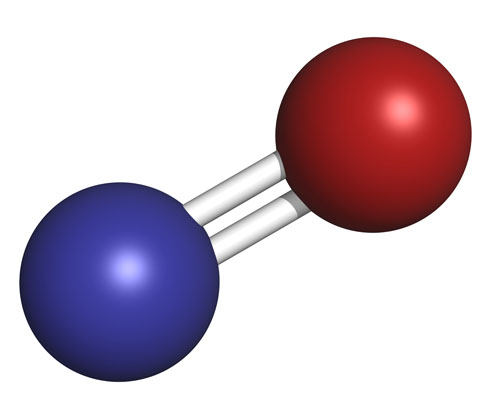
Complementing these physiological measurements were assessments of plasma nitrate and plasma nitrite concentrations, which confirmed efficient absorption and activation of the nitrate–nitrite–nitric oxide pathway.
These biomarkers are particularly valuable because they establish the mechanistic link between dietary nitrate intake and downstream vascular responses.
Demonstrating increased circulating nitrate and nitrite strengthens the biological plausibility of the observed physiological outcomes while confirming effective systemic bioavailability.
A new framework for vascular nutrition
Perhaps the greatest contribution of the Food & Function study is methodological rather than observational.
By integrating endothelial function, arterial stiffness, central haemodynamics and circulating nitric oxide metabolites into a single intervention, the investigators show why multiple complementary biomarkers offer greater physiological insight than any single cardiovascular marker.
Importantly, the study revealed that vascular responses were not uniform.
Rather than responding identically across all measures, different physiological endpoints exhibited distinct dose–response relationships, illustrating that vascular function is governed by multiple interconnected mechanisms rather than a single measurable outcome.
Vascular resilience under stress
This raises an important question: does dietary nitrate remain physiologically relevant when the vascular system is exposed to transient stress?
This formed the basis of a second randomised crossover clinical investigation, currently under peer review, in which caffeine was used as a model of short-term vascular stress.
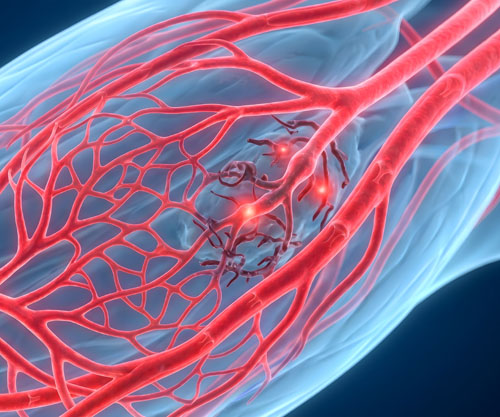
Acute caffeine intake transiently increases arterial stiffness, providing a reproducible model to investigate vascular adaptation under physiological demand.
Consistent with the published study, supplementation significantly increased circulating nitrate and nitrite concentrations, confirming engagement of the nitrate–nitrite–nitric oxide pathway.
More importantly, dietary nitrate was associated with the attenuation of caffeine-induced increases in augmentation index and augmentation pressure, suggesting preservation of arterial compliance during transient physiological challenge.
These findings extend the relevance of dietary nitrate beyond resting cardiovascular physiology. Together, these investigations illustrate an important shift in vascular nutrition research.
Rather than evaluating interventions solely through peripheral blood pressure, increasing emphasis is being placed on how nutrition influences endothelial responsiveness, arterial mechanics and vascular adaptability.
This systems-based perspective better reflects human vascular biology and provides a more informative framework for future research.
From evidence to innovation
From an innovation perspective, these studies also reinforce the importance of ingredient standardisation in clinical nutrition research. Reproducible science depends on reproducible ingredients.
Standardised delivery facilitates meaningful dose-response investigations, improves reproducibility and supports the translation of clinical evidence into commercial formulations, enabling researchers and formulators to generate and apply evidence with greater confidence.
The future of vascular resilience
The significance of these investigations extends beyond dietary nitrate alone. They reflect a broader evolution in nutrition science — from isolated clinical markers towards integrated physiological systems.
As cardiovascular/metabolic health attracts global attention, including among younger adults, there is increasing recognition that maintaining normal vascular function requires a stronger understanding of endothelial biology, arterial mechanics and nitric oxide signalling.
Although additional studies with broader populations and longer intervention periods will further strengthen the evidence base, the current findings demonstrate how comprehensive vascular assessment can provide deeper mechanistic insight into nutritional interventions than conventional cardiovascular measurements alone.
This evolving perspective aligns with the emerging concept of vascular resilience — the ability of the circulatory system to adapt efficiently to everyday physiological demands — and may help to shape the next generation of evidence-based vascular nutrition.
Bibliography
- A.G. McLellan, et al., “The Dose-Response Effects of Nitrate-Rich Beetroot Ingestion on Cardiovascular and Endothelial Function,” Food & Function 17(5), 2372–2383 (2026).
- A.G. McLellan, et al., “Acute Dietary Nitrate Supplementation Attenuates Caffeine-Induced Increase in Arterial Stiffness in Healthy Adults.” Manuscript under peer review.
- J.O. Lundberg, E. Weitzberg and M.T. Gladwin, “The Nitrate–Nitrite–Nitric Oxide Pathway in Physiology and Therapeutics,” Nature Reviews Drug Discovery 7, 156–167 (2008).
- M. Carlström, J.O. Lundberg and E. Weitzberg, “Mechanisms Underlying Blood Pressure Reduction by Dietary Inorganic Nitrate,” Acta Physiologica 224, e13080 (2018).
- C.P. Bondonno, K.D. Croft and J.M.M. Hodgson,” Dietary Nitrate, Nitric Oxide and Cardiovascular Health,” Critical Reviews in Food Science and Nutrition 56, 2036–2052 (2016).