
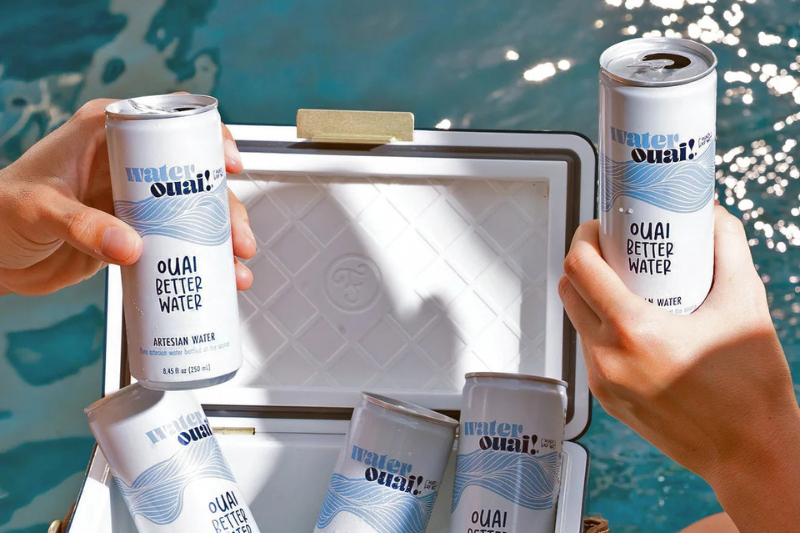
The creator behind Supergoop!, Holly Thaggard and her son, Will Thaggard, have launched a new hydration brand with an aluminium can that promises a "materials-first approach to hydration."
The pair have debuted the new brand, focusing on the packaging of the water consumers drink, which they say is "one of the most overlooked aspects of daily wellness."
WaterOuai! is built on a prevention-first philosophy and utilises a materials-first approach. It introduces pure artesian water sourced from the Edwards Aquifer, a 70-million-year-old limestone formation in the Texas Hill Country, packaged in a "thoughtfully designed" aluminium can.
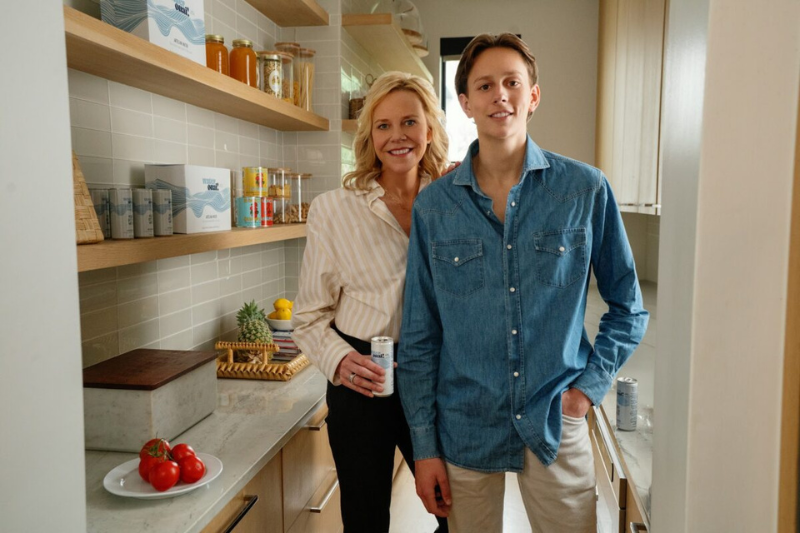 Consumer awareness has been steadily growing around everyday environmental exposure. With the rise of clean label and transparency around ingredients, the brand is well placed to capture consumer loyalty, saying it will offer "a more considered option for consumers seeking greater transparency in the products they use."
At the centre of the brand is the SUPERCAN, which has a uniform interior barrier applied before the can is formed.
WaterOuai! said in its release that this creates a more consistent lining and reflects a broader shift toward intentional materials and design, supported by a production process that reduces water use, lowers emissions and avoids solvent-based curing.
"WaterOuai! started with a simple idea: everyday habits should support long-term health," said Holly Thaggard, co-founder of WaterOuai! and founder of Supergoop!.
Hydration is one of the most consistent habits in our lives, yet the packaging hasn’t evolved at the same pace as the broader wellness conversation.
"With a prevention-first mindset that also shaped Supergoop!, we saw an opportunity to bring a more thoughtful, intentional approach to something people use every day.”
Research suggests microplastics are present in many common food and beverage containers, with studies estimating more than 200,000 microplastic particles per litre in plastic-bottled water.
Pure aluminium, commonly used in wellness beverages, can react chemically with acidic drinks such as soda and kombucha.
As a result, nearly all cans feature a hidden polymer or epoxy liner. These linings can introduce microplastics and endocrine-disrupting chemicals (such as bisphenols) into the beverage.
WaterOuai! said its SUPERCAN takes a different approach, focusing on material integrity. It features a solid PET barrier applied to the aluminium before the can is formed, resulting in a more consistent, durable lining designed to help prevent chemical transfer into the water.
The can is also made without BPA (or other bisphenols), PFAs, phthalates, or solvent-based coatings.
"With WaterOuai!, the goal isn't to make things complicated, it's to offer an option that feels more intentional and easy to choose," added Will Thaggard, co-founder of WaterOuai!.
As more people start to think about what they're exposed to every day, we wanted to create something where the quality of the can matters just as much as the water itself.
The clean-label trend in packaging
Consumers have been increasingly looking beyond marketing claims, examining ingredient lists and packaging for signs of integrity, ethics and environmental responsibility.
Packaging can play a vital role in how clean-label values are communicated and in whether a product aligns with consumer expectations. Beyond aesthetics, today's packaging must convey a level of honesty, health and responsibility
Brands are now looking to avoid plastics and other environmentally harmful materials in their packaging.
Aluminium cans have seen plastic sleeves and non-aluminium pressure-sensitive labels decrease in use, as they can contaminate the recycling stream. As aluminium boasts a recycling rate of 81% versus plastic's 52%, the packaging choice stands out for brands looking to capitalise on the clean-label trend.


