
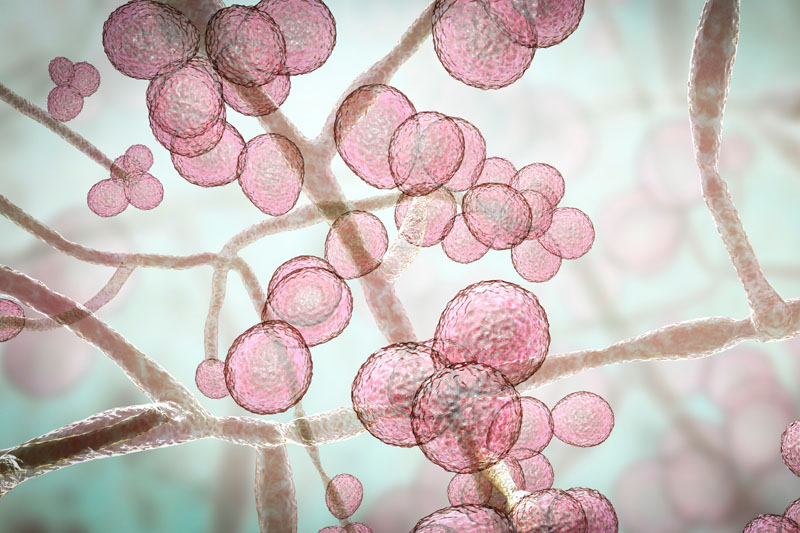
An international research team has identified a synthetic sugar molecule that could support the development of future vaccines, antibody-based therapies and rapid diagnostics for Candida auris, an emerging multidrug-resistant fungus that poses a growing risk in hospitals and other healthcare settings.
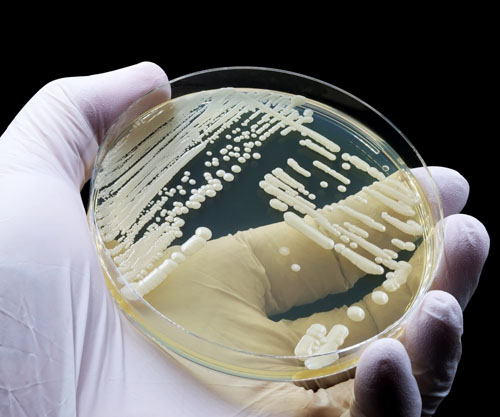
C. auris can cause severe infection in people with weakened immune systems and is difficult to treat because many strains are resistant to multiple antifungal drugs.
Since it was first reported in Japan in 2009, the pathogen has spread worldwide, with outbreaks particularly associated with healthcare environments.
No approved vaccine or rapid point-of-care diagnostic test is currently available.
The study, published in Angewandte Chemie, involved researchers from the Max Planck Institute of Colloids and Interfaces, Freie Universität Berlin and the University of Exeter’s MRC Centre for Medical Mycology.
The team chemically synthesised a sugar structure found on the surface of C. auris but absent from human cells, enabling it to be studied as a precise and reproducible target for immune recognition.
The molecule, a β-mannan tetrasaccharide, was linked to a carrier protein to create a glycoconjugate vaccine candidate.
In a mouse infection model, vaccination generated antibodies that recognised the synthetic sugar structure and reduced fungal load in the kidneys and spleen.
The researchers also produced an antibody that recognised the same structure and showed protective activity in passively immunised mice.
Importantly for healthcare technology and life science partners, the same antibody platform was also used to develop a prototype lateral flow test for detecting multiple Candida species.
The format is similar to widely used rapid tests and points to a potential route for faster identification of fungal infection in clinical settings, subject to further validation.
“Through chemical synthesis, we can precisely replicate individual sugar structures of the fungus and determine which ones the immune system recognises,” said Professor Peter H. Seeberger, director at the Max Planck Institute and co-author of the study.
“This opens up the possibility for us to find a strategy to combat Candida auris.”
Developing vaccines against fungal pathogens is challenging because fungal cell walls contain complex sugar structures that vary in length and linkage.
By synthesising defined molecules in the laboratory, the researchers were able to isolate and test individual structures rather than relying on mixtures purified from fungal cells.
“Our results show that a single, chemically defined sugar structure is sufficient to elicit a targeted immune response against Candida auris and to limit the infection in the animal model,” Professor Seeberger said.
“This provides important preclinical evidence of efficacy for this vaccine approach.”

Professor Neil Gow, of the University of Exeter’s MRC Centre for Medical Mycology, said: “The world has become increasingly anxious about the emergence of Candida auris as a drug-resistant and persistent fungal pathogen of humans."
"It has been exciting to be part of this collaboration to understand what parts of the C. auris yeast surface act as a signature of infection, and can be used to design immunotherapies and diagnostic tests.”
The approaches remain in preclinical development. The vaccine candidate and antibodies have so far been tested in animal models, while the rapid test is an early prototype.
Further studies will be required before any vaccine, immunotherapy or diagnostic can be considered for human use.


