


The Cannabis Trades Association (CTA) has warned that draft Home Office controls on THCA could place disproportionate costs on legitimate hemp and CBD businesses — particularly ingredient suppliers who handle bulk materials.
The draft Misuse of Drugs Act 1971 (Amendment) Order 2026 would control THC acid A and THC acid B as Class B drugs, "save where they are contained in cannabis or cannabis resin."
The draft is subject to the affirmative procedure, so it needs approval from both Houses and would take effect 28 days after being made.
THCA sits alongside a wider package covering semi-synthetic cannabinoids, opioids and other substances. 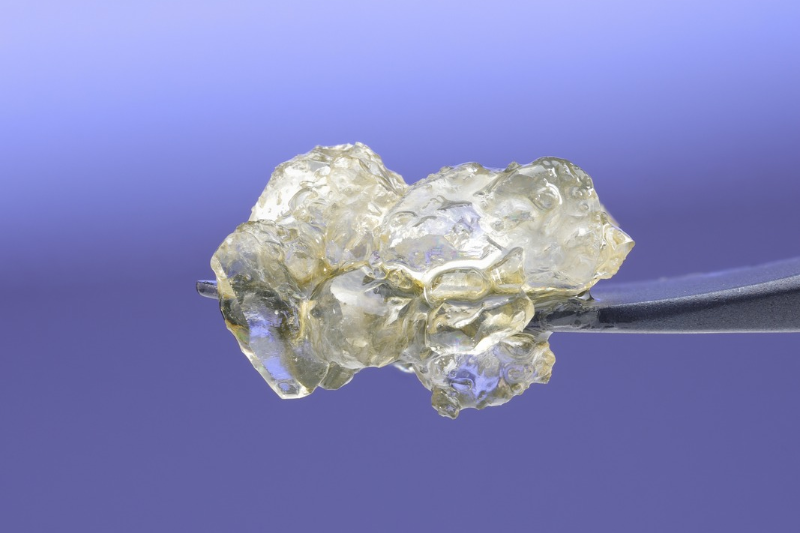
The proposal follows ACMD advice, with the council recommending control because pure THCA "diamonds" have appeared in drug markets for smoking and vaping.
The Government accepted the recommendation and said it would consult stakeholders before implementing it.
THCA is the naturally occurring acid precursor of THC, so it can be present in hemp-derived extracts even when it is not the intended ingredient.
The CTA argues this makes its control more complicated for the legitimate supply chain than for illicit products. How the carve-out for material contained in cannabis applies to hemp-derived extracts is a key question.
The 1 mg problem
The CTA's main concern is the 1 mg exempt product provision.
The condition applies to the absolute quantity of a controlled drug in a component part, not its concentration.
A bulk ingredient with trace concentrations could exceed it, while a smaller finished product with the same concentration would not.
The CTA stresses that the provision is not a general exemption, since products must also meet other statutory conditions and wants the Home Office to clarify how the rules apply to raw materials, intermediate extracts and finished CBD products.
Testing and reliability
Analytical methods are a second pressure point. Some techniques heat samples, which can convert THCA into THC during analysis, while others quantify the two separately.
At very low concentrations, sample preparation, sensitivity and measurement uncertainty can all affect results; thus, the CTA says that it wants consistent requirements for validated methods, detection and quantification limits and reporting of individual cannabinoids.
Earlier ACMD advice has also called for standardised protocols to extract and quantify controlled cannabinoids and their precursor acids.
service
Impact and investment
The draft's explanatory note says a full impact assessment was not produced because no, or no significant, impact on the private, voluntary or public sector is foreseen.
The CTA, however, says that this has not been adequately demonstrated.
It points to foreseeable costs for laboratory testing, supplier verification, compliance documentation and possibly manufacturing changes or controlled-drug licensing.
The association added that investment could be delayed where businesses cannot tell how the controls apply to their materials.
Marika Graham-Woods, CEO and Chair of the CTA, said: "The industry is not asking for an exemption from appropriate public health controls."
"We are asking for legislation that recognises the difference between deliberately producing controlled cannabinoids and their incidental presence in legitimate hemp-derived materials."
When the Government proposes additional controls without a meaningful assessment of their impact on businesses, it risks creating avoidable costs and uncertainty for responsible operators. Protecting consumers and supporting legitimate industry should not be mutually exclusive.
Wider regulatory uncertainty
The CTA says the sector already faces uncertainty, citing FSA figures showing 10,374 validated CBD entries on the public list, six high-purity dossiers with positive safety assessments and none with final novel food authorisation.
It also warns that the planned UK-EU SPS agreement could leave existing applicants in limbo.
What to watch
Suppliers and brands may want to review cannabinoid specifications, supplier documentation and how their labs report THCA and THC.
The Home Office's response on exempt product clarity and the impact assessment will show how much of the CTA's case it accepts.


