
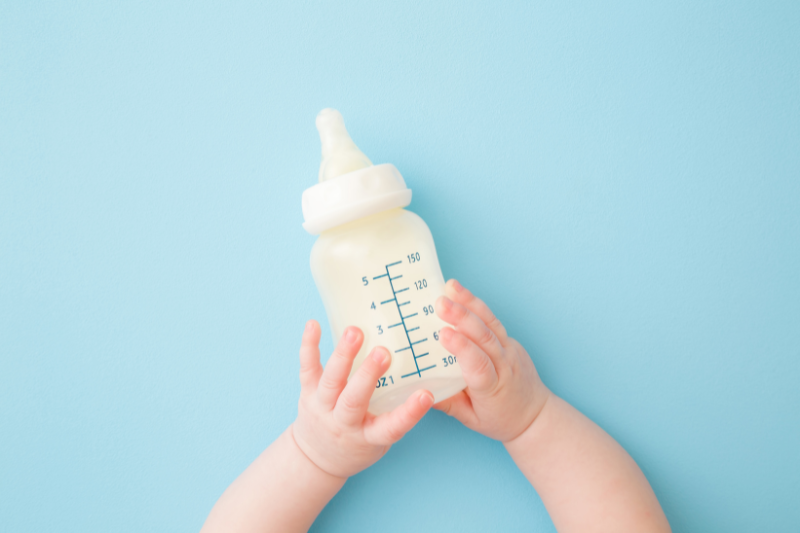
The US Food and Drug Administration (FDA) has announced the results from an investigation into chemical contaminants in infant formulas available on the US market.
"We tested more infant formula than ever before and the results are clear: most products meet a high safety standard — but even small exposures matter for newborns," said Health and Human Services Secretary Robert F. Kennedy, Jr.
We will hold manufacturers accountable and give parents honest, transparent data they can trust. Protecting our children's health is non-negotiable.
The agency tested more than 300 infant formula samples, which were representative of products sold at retail across the US — generating more than 120,000 data points — for lead, mercury, cadmium, arsenic, pesticides (including glyphosate and glufosinate), per- and polyfluoroalkyl substances (PFAS) and phthalates.
The samples, which included powders, ready-to-feed liquids and concentrated liquids, were rigorously tested and analysed in FDA laboratories.
Across the products tested, an overwhelming majority of samples had undetectable or very low levels of contaminants, which the agency says affirms that supplies of US infant formula are safe.
While breast milk is widely considered the gold standard and optimal source of nutrition for infants whenever possible, millions of parents depend on formula.
"You can judge a society by how it treats its most vulnerable members. That's why we're doing everything in our power to make sure our babies and infants have safe, high-quality formula options that are backed by a resilient supply chain," said FDA Commissioner Dr Marty Makary.
The results of this study are encouraging. We will continue to advance formula innovation and safety for the millions of families who depend on it.
Though the overall levels of contaminants in the infant formula samples tested were low, the FDA added that it would follow up with additional testing and take appropriate action where necessary.
This includes conducting further testing, including for additional contaminants, continuing to engage with manufacturers on measures to reduce contaminant levels to the lowest possible levels and working to establish action levels for contaminants in infant formula.
"As a father, I understand how important it is for parents to trust the safety of the food they give their children. At the FDA, ensuring the health of America's next generation is vital," said Kyle Diamantas, J.D., Deputy Commissioner for Food.
Through Operation Stork Speed and our Closer to Zero initiative, this testing — the first of its kind — reinforces that infant formula in the US is a safe option for parents and caregivers who rely on it. We will continue working to drive contaminants to as low as possible through rigorous oversight.
This testing was carried out as part of Operation Stork Speed, the FDA's Closer to Zero initiative and the FDA's routine food surveillance work.
The FDA added that it will continue to test infant formula as part of Operation Stork Speed and ongoing surveillance of foods, including testing infant formula products that have entered the US market since this initial survey began and conducting additional compliance sampling.
The agency will share results from follow-up surveys, which it says is consistent with its commitment to transparency.
Secretary Kennedy will host chief executives from leading infant formula companies in May for a roundtable discussion focused on modernising the FDA’s infant formula oversight and on the continued implementation of Operation Stork Speed, which includes aspects of nutrition, chemical and microbiological food safety.
The news comes after the food and beverage giants Danone, Lactalis and Nestle were embroiled in a tainted infant formula scandal earlier this year, following the detection of the cereulide toxin in some formulas, triggering major recalls. The outbreak was linked to a single supplier of arachidonic acid (ARA) oil — a key ingredient used in premium infant formula.


