
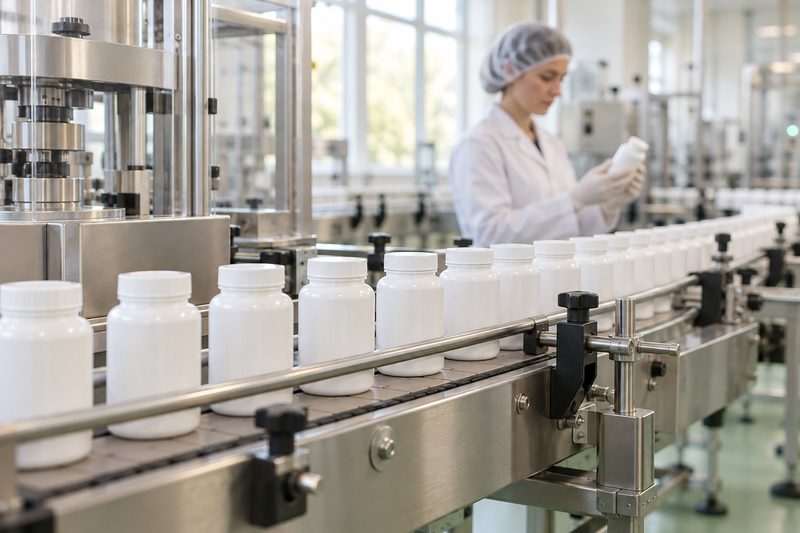
White label is the fastest way to start a supplement brand in Europe. The manufacturer already has a tested formula. Your brand adds its own label and sells the product. There is no long development stage and no need to pay for new research.
But fast does not mean simple. The manufacturer you choose decides how much stock you must buy, how much cash you need before the first sale and whether your product can legally go on sale in your target countries. A low price per unit means little if your labels fail an inspection or the first batch sits in a warehouse for a year.
This guide gives 7 checks to run before you sign a contract, with the questions to ask in your first calls.
White label, private label or custom: which model fits
Before you compare manufacturers, decide which model you need. The 3 models differ in who owns the formula, how much you must order and how fast you can launch.
|
|
|
|
|
|
|
|
|
|
|
|
|
|
|
|
|
|
|
|
|
|
|
|
|
|
|
|
|
|
|
|
|
|
|
This guide focuses on white label, but most of the checks also apply to the other 2 models.
Check 1: the minimum order fits your launch plan
The minimum order quantity (MOQ) decides how much cash you need before you sell a single unit. For a first product, a low MOQ reduces risk. You can test demand, read the first customer reviews and reorder when you know your numbers.
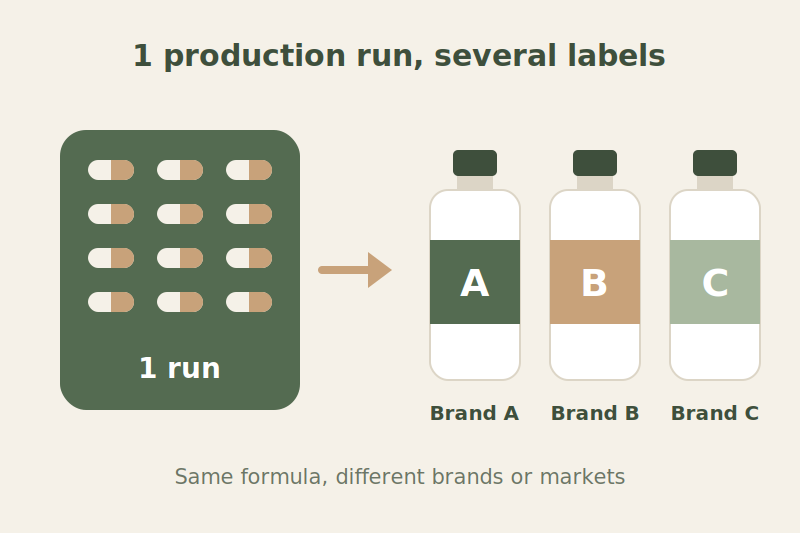
Ask also how flexible the MOQ is inside one production run. Some manufacturers let you split one batch across several labels. This allows you to:
- test 2 brand names or label designs with the same formula
- prepare versions for different countries in one run
- sell under several brands without paying for several batches
For example, Merywood, which supplies white label supplements in EU markets, starts white label orders at 2,500 units and allows several label designs, brand names or SKUs within one run.
Check 2: the formula range and formats match your product idea
A strong white label manufacturer has a large library of tested formulas. Check that it covers the health areas your buyers care about. For example, Merywood's white label range includes formulas for:
- men's and women's health
- weight management
- joint and bone health
- blood sugar balance for people with diabetes
- heart health, including support for people with high blood pressure
Position these products with care. They are food supplements, not medicines. They can support people with these conditions as part of a balanced diet and a healthy lifestyle, but they do not treat disease and do not replace treatment prescribed by a doctor. Labels and marketing can use only authorised EU health claims, such as "chromium contributes to the maintenance of normal blood glucose levels."
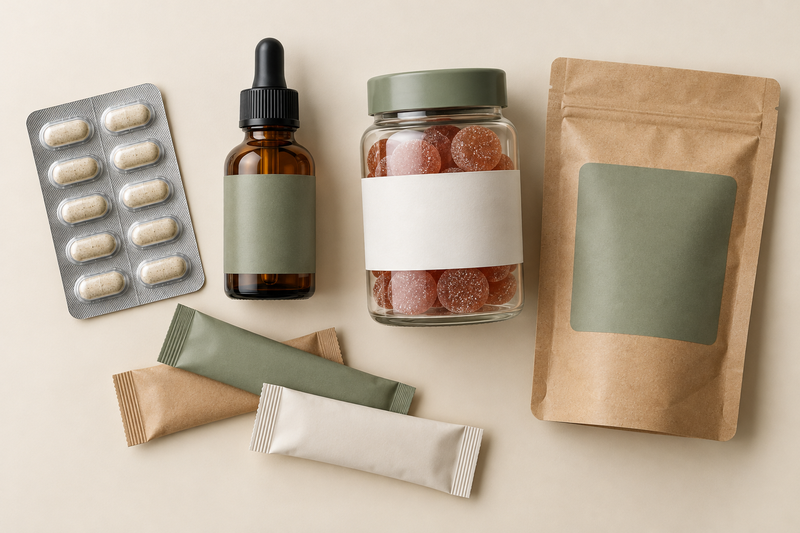
Ask also which formats are available. Common supplement formats include:
- capsules, tablets and softgels
- powders and drink mixes
- gummies and chewable tablets
- liquids, drops and sprays
- effervescent tablets, shots and oral films
Vegan options are also in demand, such as plant-based capsules, vegan softgels and pectin gummies.
For every formula, request a specification sheet. It should list each ingredient, the amount per daily dose and the source of key raw materials. Check that colored capsules and coated tablets do not contain titanium dioxide (E171). The EU has banned it as a food additive since 2022.
Check 3: production is certified in the EU
All food businesses in the EU must follow food safety procedures based on HACCP principles under Regulation (EC) No 852/2004. This is the legal minimum, not an extra. Ask which additional certificates the factory holds, for example GMP, ISO 22000 or FSSC 22000. If you plan to sell organic, vegan or halal products, you need the matching certificates too.
Questions to ask:
- Where is the factory, and can you visit it or see a recent audit report?
- Which certificates are valid today, and when do they expire?
- Who pays for a new batch if a batch fails a test?
Check 4: every batch is tested, and you get the results
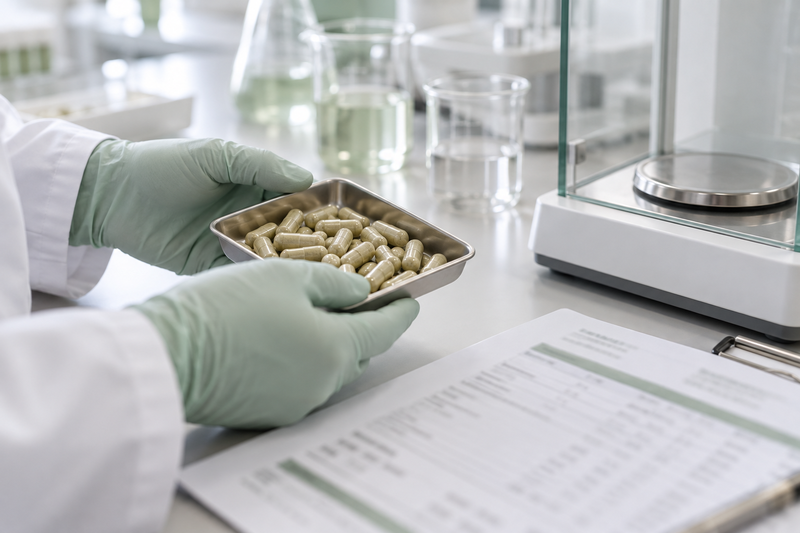
Testing protects your brand when a customer, a marketplace or an inspector asks questions. Ask for a certificate of analysis (CoA) for every batch, not only for the first one. A useful CoA covers:
- identity and amount of the active ingredients
- microbiological purity
- heavy metals such as lead, cadmium and mercury, which have legal limits for food supplements under Regulation (EU) 2023/915
Ask how the manufacturer sets the shelf life and whether it is based on stability tests.
Check 5: the manufacturer handles EU compliance
The EU has common rules for food supplements, but each country still controls its own market. Most EU countries require a notification to the national food authority before sales start, and each country uses its own process.
A good manufacturer helps you prepare the full compliance file:
- Notification. Documents for each target country.
- Label content. Supplement labels must show the daily dose, a warning not to exceed it, a statement that supplements do not replace a varied diet and a warning to keep the product out of reach of young children (Directive 2002/46/EC).
- Language. The label must be in a language that buyers in that country understand (Regulation (EU) No 1169/2011).
- Claims. Only health claims from the EU register are allowed (Regulation (EC) No 1924/2006). A supplement cannot claim to prevent, treat or cure a disease.
Dose levels need special attention. Today, each country sets its own maximum levels for vitamins and minerals. The European Commission plans to set common EU limits, and in 2026 it confirmed the timeline for this work. If the new limits are low, some high-dose products may need new formulas, new labels and a new notification. Ask your manufacturer how they will inform you about the changes and help you adapt.
Check 6: label and packaging support is part of the service
With a white label product, the label is the main thing that makes your product different. Ask what support is included:
- advice on label design and the legal text
- label printing on demand, so you do not pay for thousands of labels you may need to change
- packaging matched to the format: blisters for tablets, jars for gummies and powders, doypacks for sports powders, dropper bottles for liquids
The new EU Packaging and Packaging Waste Regulation (EU) 2025/40 started to apply in August 2026, with more deadlines in the next years. Ask whether the packaging options already follow its rules.
Check 7: one partner covers the path from formula to shelf
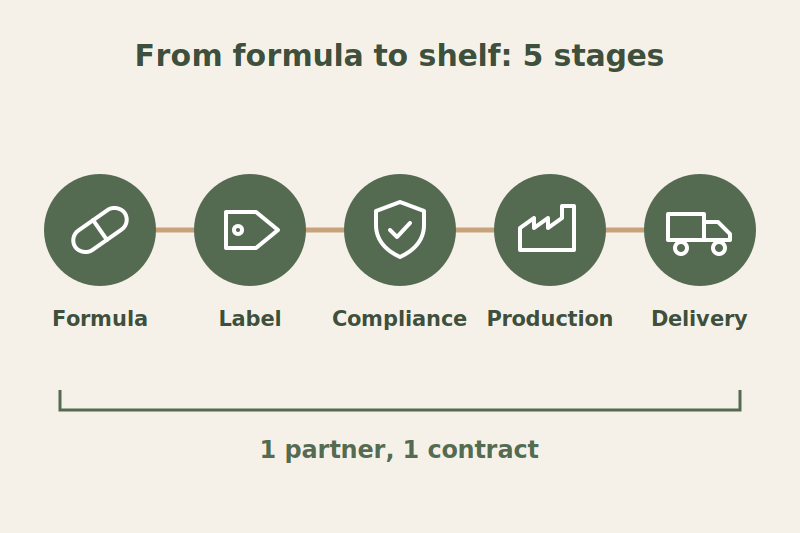
Every handover between suppliers adds time and risk. When the formula comes from one company, the labels from a second and the compliance work from a third, delays are common and responsibility is unclear. A full-cycle manufacturer manages the whole path.
Ask for a written timeline for each stage. Ask where the finished goods will go: to your own warehouse, a fulfillment center or a marketplace. Finally, ask for references from brands that sell in your target countries. A short call with a current client often tells you more than a sales presentation.
Checklist for your first calls
Use these 7 questions when you compare manufacturers:
- What is the MOQ, and can one run carry several labels or SKUs?
- Which tested formulas and formats do you offer in my category?
- Which certificates does the factory hold, and are they valid today?
- Will I receive a certificate of analysis for every batch?
- Will you prepare the notification and label text for each target country?
- Do you print labels on demand, and which packaging fits my format?
- What is the full timeline from contract to delivery?
A manufacturer that gives clear answers to all 7 questions lowers both your risk and the cash you need to launch. The price per unit still matters, but it is only 1 part of the real cost of a new supplement brand.


