

The nutraceuticals space—from beauty-from-within to broader wellness—is entering a new phase. Product success is no longer defined by ingredients alone, but by how effectively science, formulation, and user experience come together.
At the forefront of this shift is TOSLA, a liquid-first CDMO that has positioned itself as an innovation partner rather than a traditional manufacturer.
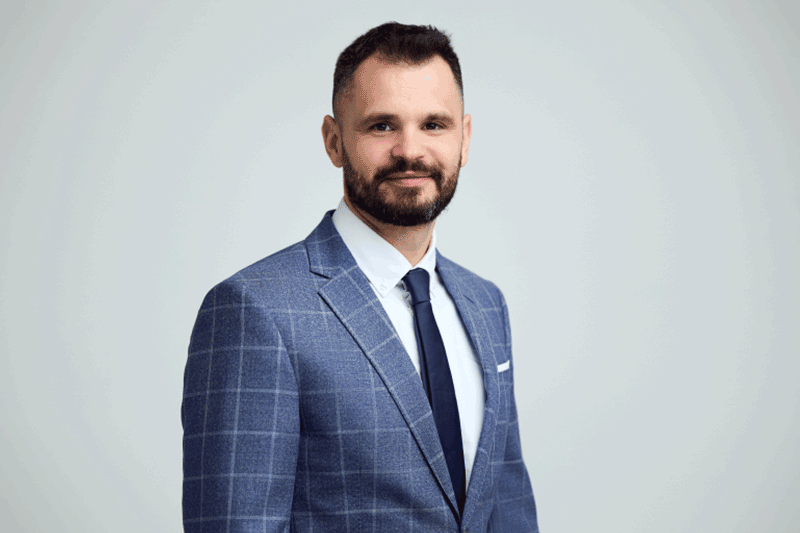
Uroš Gotar, Chief Innovation Officer at TOSLA
According to Uroš Gotar, Chief Innovation Officer at TOSLA, the industry is moving beyond a narrow focus on actives.
“For years, the industry was driven by ingredient innovation. Today, the real challenge is turning those ingredients into products consumers will actually use consistently,” he says.
This shift places a new emphasis on adherence, where taste, convenience, and format directly influence outcomes.
From formulation to daily use
Liquid dietary supplements are gaining ground as brands search for formats that integrate easily into everyday routines. Unlike capsules or powders, liquids offer a complete experience—simple to consume and more likely to become part of a daily habit.
“Taste is no longer secondary,” Gotar explains. “It is a core part of product performance. If a product is not enjoyable, it will not be used long enough to deliver results.”
To address this, TOSLA has focused on advanced formulation technologies such as VELIOUS™, enabling sugar-free liquid solutions that mask even complex combinations of active ingredients while maintaining stability and shelf life.
Raising the standard on scientific credibility
At the same time, expectations around scientific validation are increasing.
“Consumers and regulators expect more evidence and more transparency,” says Gotar. “Ingredient-level claims are no longer enough. Brands need proof that the final product works.”
TOSLA supports this by developing clinically supported formulations, strengthening the credibility of the products its partners bring to market.
A new role for CDMOs
This reflects a broader change in the role of CDMOs. Brands now expect partners who can support development, validation, and scale—not just production.
“With the complexity of today’s market, brands seek support beyond manufacturing capacity. They need expertise across the entire product lifecycle,” Gotar concludes.
As liquid dietary supplements continue to expand across beauty, wellness, and longevity, leadership will belong to companies that combine scientific credibility, product experience, and scalable execution into one focused strategy.
ABOUT PAGE Q&A
TOSLA leads the next phase of liquid dietary supplements
Building on its growing role as a liquid-first CDMO and innovation partner, TOSLA is advancing how liquid dietary supplements are developed, validated, and delivered at scale. Uroš Gotar, Chief Innovation Officer at TOSLA, shares his perspective on industry shifts, scientific standards, and what brands must prioritise to stay competitive.
Q: The nutraceuticals space is evolving rapidly. What is the most important shift you see today?
The most important shift is that the industry is moving from an ingredient-first mindset to a product-performance mindset.
For a long time, innovation meant finding the next active ingredient. Today, that is only the beginning. The real challenge is creating a product that people will actually use every day.
If a product does not fit into a consumer’s routine, it does not matter how strong the science is behind it.
Q: You emphasise adherence as a defining factor. Why is it so critical?
Because adherence connects science to results.
A product can be effective in theory, but if consumers stop using it, there are no outcomes. In practice, most products fail not because they do not work, but because they are inconvenient or unpleasant to use.
The industry needs to design products that people want to take, not products they feel they should take.
Q: Where do liquid supplements fit into this shift?
Liquids align closely with everyday behaviour. They are simple, fast, and intuitive to use.
They also allow for higher flexibility in formulation and delivering meaningful doses in a single serving. More importantly, they create a stronger user experience, which is essential for building habits.
That combination of performance and experience is what makes liquids strategically important.
Q: Taste is becoming a major topic. Why now?
Because the market is becoming more competitive and more mature.
When products offer similar claims, the deciding factor becomes the experience. Taste directly influences whether someone continues using a product or not.
It impacts repeat purchase, loyalty, and ultimately the long-term success of a brand.
Q: Many active ingredients are difficult to formulate with. How do you address this?
This is one of the biggest technical challenges in the industry.
High-performing ingredients often bring bitterness or off-notes, especially in combination. If you cannot solve that, you force a compromise between performance and experience.
At TOSLA, we developed VELIOUS™ Flavour Technology to eliminate that compromise. It allows us to work with complex formulations while keeping the final product pleasant to consume, without using any sugar.
Q: Scientific validation is also gaining importance. How do you see this developing?
We are moving towards a standard where product-level validation becomes essential.
Consumers are more informed, and regulatory pressure is increasing. It is no longer sufficient to rely on general ingredient claims.
Brands need to demonstrate that their specific formulation, at the defined dosage and delivery format, delivers measurable effects.
Q: This goes beyond traditional CDMO roles. Why take that approach?
Because the expectations of brand partners have changed.
They are looking for partners who can help them build strong, defensible products, not only manufacture them.
By investing in formulation and validation, we enable brands to move with more confidence and bring products to market with a stronger foundation.

Q: How do you define TOSLA’s role today?
We operate as an innovation partner.
That means we support the full journey, delivering turnkey solutions: from concept and formulation to validation and large-scale production. It is about connecting all parts of the process into one system.
This approach reduces complexity for our partners and improves the quality of the final product.
At the same time, we also work closely with ingredient manufacturers, helping translate breakthrough innovations into finished products that can succeed in the market. Our collaboration with Geltor is a good example of this. Advanced ingredients alone do not reach consumers—just as efficacy alone does not guarantee results without adherence. The real value is created when innovation is transformed into a formulation that reaches people and is translated into their daily rituals.
That is where we see our role: bridging the gap between scientific discovery and real-world application.
Q: What should brands prioritise when selecting a partner?
They should look beyond production capacity.
The critical variables are technical: stability, taste consistency, scalability, and regulatory compliance.
These factors determine whether a product succeeds in the market. If they are not managed correctly from the beginning, problems appear later when they are much harder to fix.
Q: Which areas of growth are most important in the coming years?
We see strong demand across longevity, cognitive performance, gut health, and beauty-from-within.
But the bigger shift is towards consolidation—products that combine multiple benefits into a simple, convenient format.
Consumers are looking for efficiency and clarity, not complexity.
Q: Final question—what will define the leaders in this category going forward?
The companies that will lead are those that understand that nutraceuticals are becoming part of daily routines.
Success will not be defined by ingredients alone, but by how well a product fits into people’s lives.
Those who can combine strong science, precise formulation, and a product that people consistently enjoy using will define the next phase of the industry.


