
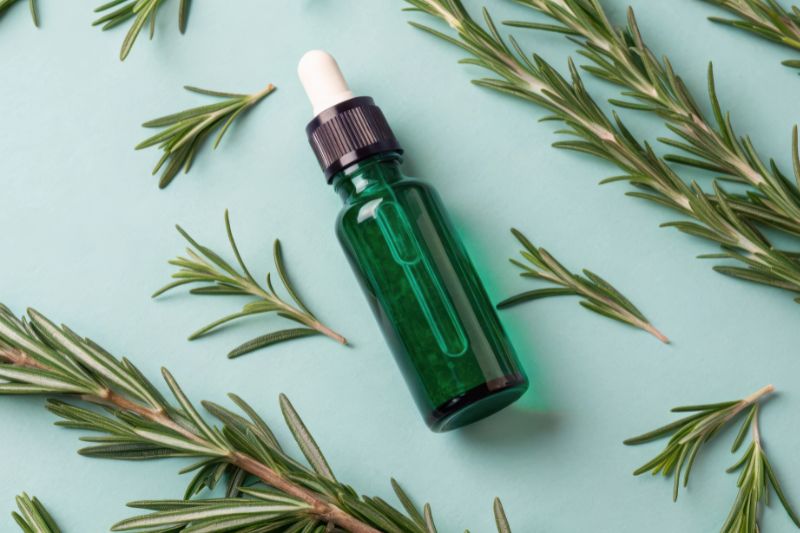
A compound in rosemary has been shown to help wounds heal without scarring by triggering a key regenerative nerve receptor.
Inspired by a popular online skincare trend centring on rosemary and rosemary extract, researchers have uncovered a mechanism that could reshape future wound-care treatments.
Scientists at the Perelman School of Medicine at the University of Pennsylvania report in JCI Insight that a natural compound in rosemary leaves may help wounds heal more effectively and limit the formation of scars.
"Many skin injuries end in scars and in some people, it can lead to long-term cosmetic and even functional issues," said senior author Dr Thomas Leung, an Associate Professor of Dermatology at Penn.
"Our findings suggest that rosemary extract and specifically the antioxidant carnosic acid, can shift the healing process from scarring to healthy skin regeneration."
"We don't have proven ways to consistently do that in humans."
The idea for the project began on TikTok and Instagram.
After noticing that many creators were promoting rosemary serums and rosemary-based products for better skin recovery, Penn undergraduate student Jiayi Pang and PhD candidate Emmanuel Rapp Reyes approached Leung to understand whether these claims had scientific merit.
Their curiosity led them to begin a series of laboratory experiments.
"We hypothesised there was likely something real behind the hype because rosemary contains many antioxidants," said Pang, co-lead author of the study.
"But we knew that to really uncover its potential, we needed to prove its healing properties and uncover how exactly it was facilitating healing."
Working with mice, the research team created a cream made with carnosic acid, a naturally occurring antioxidant found primarily in rosemary.
The cream sped up wound closure and helped regenerate structures such as hair follicles, oil glands and cartilage.
The scientists also found that the compound activated a skin nerve sensor known as TRPA1, which had previously been linked to the ability to heal without scars.
When the cream was used on mice that lacked TRPA1, the treatment no longer produced the same regenerative effects.
"We also identified other herbs, such as thyme and oregano, that may activate TRPA1."
"But rosemary stood out for its potency and safety," said Rapp Reyes, co-lead author of the study.
"Other natural ingredients, such as mustard oil or the topical medication imiquimod, are known to also stimulate the TRPA1 receptor, but unlike rosemary, those can cause irritation and inflammation."
The researchers discovered that rosemary's regenerative effect occurs only at the location where the carnosic acid cream is used.
Applying the cream to areas of skin far from the injury did not lead to scar-free healing, emphasising that its benefits are strictly local.
Potential for future wound care research
The Penn team advises people to speak with their healthcare providers before adding rosemary products to their skincare routine or creating homemade mixtures.
Still, as rosemary is widely available and inexpensive, the researchers hope their findings encourage more exploration of its potential benefits in human wound care, especially for individuals prone to significant scarring.
"If rosemary is part of your skincare regimen and you think it's working, it likely is," said Leung.
"I'm proud that the young scientists who led this research sought answers to questions in their everyday lives."


