

When an extract has to do more than a certificate of analysis
The market for botanical extracts is growing, and at the same time it's becoming harder and harder for ingredient suppliers to stand out from the competition. To supplement manufacturers, many extracts look almost interchangeable at first glance: the same plant, similar standardisation, a comparable certificate of analysis, and often a similar price. Position your ingredient on spec and cost alone, and you quickly find yourself competing against ever-cheaper alternatives.
A botanical extract is far more than just “the plant in concentrated form.” Its origin, harvest time, the part of the plant used, the extraction method, and the processing all shape its composition, and with it, its biological activity. Studies show that different extraction methods can significantly change not only the concentration of individual compounds but also an extract's overall activity profile.
That raises a crucial question: Is a CoA enough to show what an extract contains? Or will it become just as important to demonstrate that it also shows measurable biological activity?
We think the answer to the last question is “yes”, so from this article, you’ll learn why cell studies can offer a strong competitive advantage as a complementary extract analysis method in a crowded extract market.
Why conventional analytical testing matters but doesn't answer everything
Analytical testing is indispensable. It confirms identity, purity, safety, and compliance with defined specifications. This data forms the foundation of quality assurance.
What conventional testing can't answer, though, is a different question: Does the extract actually show biological activity?
An ingredient can be chemically standardised to perfection and still show only limited activity. Conversely, a comparatively simple or unbranded extract can show convincing biological activity in a bioassay.
This is especially relevant for botanical ingredients. Standardising to one or a few compounds often captures only part of an extract's true complexity. Whether that translates into biological activity can't be inferred from a certificate of analysis alone.
This is exactly where cell studies and bioassays come in. They don't replace conventional testing; they add a functional layer to it. The ingredient isn't just described chemically, it's also characterised in terms of its biological activity.
Cell studies and bioassays: From specification to functional ingredient characterisation
For ingredient suppliers, the added information from cell studies and bioassays can be a decisive competitive advantage. Today, supplement manufacturers aren't just looking for ingredients that are regulatory compliant, available, and attractively priced. They're looking for ingredients they can place in a scientific context, backed by a clear and transparent body of evidence.
Cell studies can help build that foundation. Depending on the research question, you can investigate whether an extract influences inflammatory processes, shows antioxidant properties, or modulates specific biological signaling pathways. The goal here isn't a health claim for the eventual finished product. The cell study looks into the scientific characterization of the ingredient itself.
This creates added value for manufacturers, too, as they get an indication of whether it shows measurable biological activity under defined laboratory conditions.
Use cell studies to gather ingredient data and not to establish health claims
Dietary supplements are subject to strict rules when it comes to communicating health effects. Claims about a finished product may only be made within the framework of the applicable Health Claims Regulation. A cell study on a finished product is scientifically interesting, but it doesn't automatically translate into a permissible health claim.
For brands, this means they can't freely advertise efficacy claims for their supplements online, on product pages, or on social media.
For ingredient suppliers, though, a different opportunity opens up. Cell studies can help describe its biological activity scientifically and frame it in a B2B context in technical dossiers, ingredient presentations, expert discussions, or during product development, for example.
Placed in the right context, this kind of data can provide a far more solid foundation than standardisation figures or marketing claims alone.
Of course, the same principle applies here: all communication must be regulatory compliant, factual, and not misleading. Scientific ingredient data doesn't replace approved health claims, but it can help substantiate the quality and distinctive features of an extract in a transparent, verifiable way.
How to use cell studies as a tool for development, quality assurance, and sales
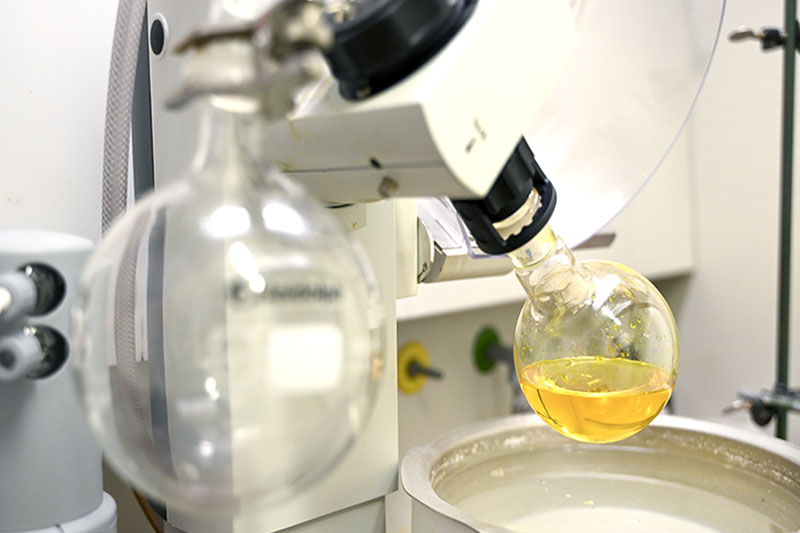
Cell studies deliver the most value when they're treated not as a one-off marketing exercise but as part of a long-term ingredient strategy. They can support the development of new extracts, safeguard quality, and strengthen sales with scientific data throughout the product value chain:
- Product development: Cell studies help compare different extracts, extraction methods, or batches. You can check whether an ingredient shows the biological activity you're after early on, before investing heavily in brand building, clinical studies, or marketing.
- Quality assurance: Botanical ingredients are subject to natural variation. Alongside chemical testing, biological activity can be a useful quality parameter for comparing new batches against previous production runs.
- Sales and marketing: Scientific data creates a solid basis for sales conversations and marketing communications (in the B2B setting.) Instead of talking only about specifications, prices, or minimum order quantities, suppliers can clearly explain why their ingredient is particularly well suited to specific product concepts. That builds trust and takes the conversation to a more technical level.
How to use cell-studies to create your own branded ingredient
Branded ingredients like KSM-66® Ashwagandha show how a raw material can become a strong brand. Instead of just selling “ashwagandha”, suppliers selling a branded ingredient are selling a scientifically documented ingredient with a clear identity, defined quality standards, and a transparent body of data.
Not every extract manufacturer wants to (or can) develop the next globally established branded ingredient. But the underlying principle carries over to other extracts: if you can back up what makes your ingredient distinctive with science, you create a much stronger basis for differentiation and positioning.
This opens up new possibilities, especially for unbranded extracts. A lesser-known or more affordable ingredient isn't necessarily inferior to a branded one. If it shows comparable biological activity in comparable cell studies, you have a solid argument for quality, regardless of the brand name.
Cell studies provide an objective basis for that comparison. Answering questions such as:
- how does your extract perform against a reference ingredient?
- does it show similar activity patterns?
- where do its strengths and limits lie?
helps you position an ingredient on scientific data.
What these studies can look like
Depending on the research question, different in vitro models come into play, for example in the form of cell cultures, receptor-binding studies, or enzyme assays. Which method you choose depends on the biological activity you want to investigate.
If inflammation is the focus, you can use human immune cells and analyse typical inflammatory markers. Questions around stress, sleep, or mental health call for different cell models or receptor systems. Skin and healthy-aging concepts, in turn, put other biological parameters front and center.
Regardless of the model, every cell study follows a similar principle: first, you define a specific research question. Then the extract is tested under controlled laboratory conditions, and its biological activity is evaluated using suitable parameters.
Numerous preclinical studies show that cell studies are already well established in ingredient research. They're used, for example, to investigate the biological activity of well-known plant extracts such as devil's claw, milk thistle, or Hericium in the context of inflammation.
For ingredient suppliers, getting started doesn't have to be complicated. Often, a clearly defined study design with a specific research question and a few meaningful parameters is enough.
Which ingredients are the best fit for a cell study?
Not every ingredient needs to be tested right away. Cell studies make the most sense where they add real value for development, sales, or ingredient differentiation, for example in the following cases:
- Ingredients in high demand and under heavy price pressure.
- Extracts that have struggled to stand out from the competition.
- Ingredients aimed at trending areas such as inflammation, gut health, stress, sleep, skin, women's health, or healthy aging.
- Ingredients whose distinctive extraction method, origin, or quality you want to back up with science.
- Batches or variants whose biological comparability needs to be verified.
With well-known ingredients in particular, cell studies can make a decisive difference. Manufacturers already know what turmeric, ashwagandha, boswellia, and devil's claw are. The real question, though, is: Why should they choose this specific extract and this specific supplier?
The payoff for ingredient suppliers
For ingredient suppliers, cell studies offer one thing above all: a new way to differentiate themselves in an increasingly commoditised market:
- Scientific data complements the standard ingredient documentation and provides arguments that go beyond standardisation, the certificate of analysis, and price.
- It makes conversations with manufacturers easier and strengthens your own positioning.
A scientifically characterised ingredient can be presented more credibly, compared more objectively against competing products, and, over time, built into a distinct product story of its own.
This opens up new opportunities, especially for unbranded extracts. If an ingredient shows convincing biological activity in comparable cell studies, it can be positioned as a serious alternative to established branded ingredients.
The bottom line
The market for botanical extracts is becoming more and more competitive. More suppliers, rising price pressure, and stricter regulatory requirements make it hard to stand out on specification and availability alone.
Cell studies add a biological perspective to conventional testing. They show not just what an ingredient contains, but whether it shows measurable biological activity under defined laboratory conditions. That creates a more solid foundation for development, quality assurance, and sales. And that can be exactly what makes the difference.


