

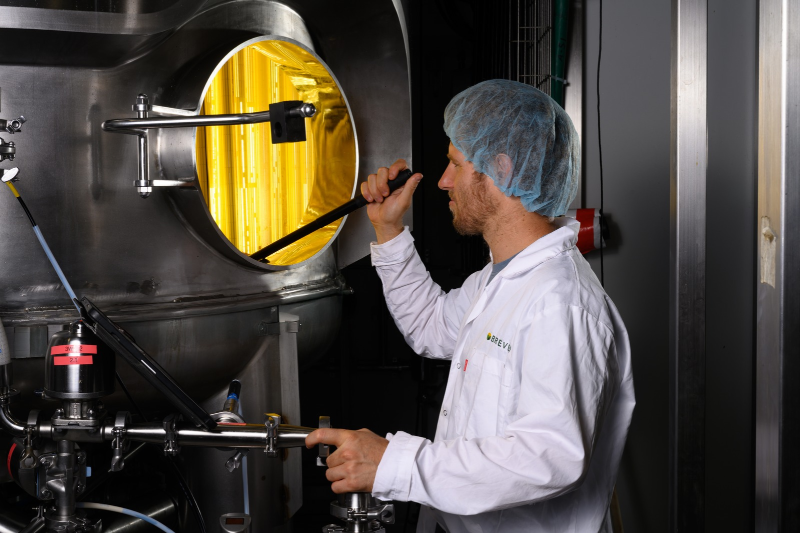
Israeli climate biotech company Brevel has signed a 50:50 joint venture with Indian conglomerate The Wave Group to establish an illuminated fermentation facility in Uttar Pradesh, India, designed to expand production of microalgae and plant-derived bioactive ingredients.
The planned facility will have a total bioreactor capacity of 300,000 litres, representing a significant expansion from Brevel’s existing 5000-litre commercial bioreactor in Israel.
The Wave Group will fund the project, with investment estimated at US$10-15m.
Construction is expected to begin in late 2026, with full-scale production targeted within 18 months.
The plant will initially manufacture Purallis, Brevel’s clean-label chlorella ingredient for the nutraceutical market.
Its infrastructure will also support the production of other microorganisms and plant cell cultures that benefit from light-driven metabolism, providing a potential manufacturing platform for companies looking to scale up novel ingredients.
Scaling illuminated fermentation
Brevel’s patented illuminated fermentation technology combines conventional sugar-fed fermentation with light in a closed production system.
Sugar supplies energy and nutrients, while light stimulates photosynthetic microorganisms such as chlorella to produce valuable compounds, including chlorophyll and carotenoids.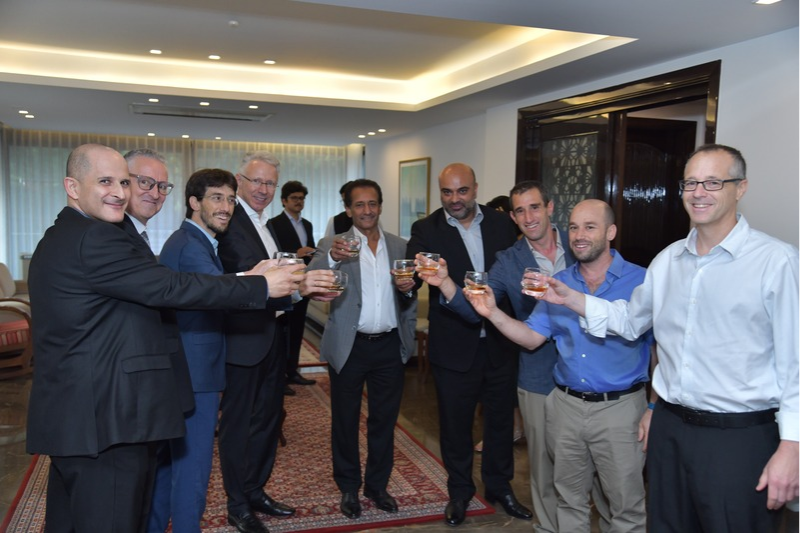
The approach is designed to combine the productivity of fermentation with the potential benefits of light-driven biological processes, offering an alternative to conventional microalgae cultivation and creating opportunities to improve the production of plant-derived bioactives.
The expansion follows a series of commercialisation milestones for Brevel this year.
In March, the company introduced Purallis for the food supplement and wider food ingredient markets, positioning the ingredient as a standardised, indoor-grown chlorella alternative to traditional pond cultivation.
In June, Brevel and US-based plant cell technology company Ayana Bio secured a $1.25m grant from the Israel-US Binational Industrial Research and Development (BIRD) Foundation to advance the production of plant-derived bioactive ingredients using illuminated fermentation.
Brevel also partnered with Coffeesai to explore scaling coffee cell cultures using the technology.
Circular production model
The Indian facility will also incorporate a circular-economy approach, using sugar-processing side streams from The Wave Group’s nearby sugar mills as fermentation inputs.
Initial trials using sugar mill byproducts have reportedly delivered promising results, with both companies continuing to optimise the process.
By utilising these side streams and locating production close to the sugar mills, the partners aim to reduce feedstock costs, transportation requirements and associated environmental impacts.
For Brevel, the joint venture represents a step towards making illuminated fermentation accessible to ingredient innovators beyond its own microalgae portfolio, with the potential to support commercial-scale production of nutraceutical ingredients and other light-dependent biological materials.


