
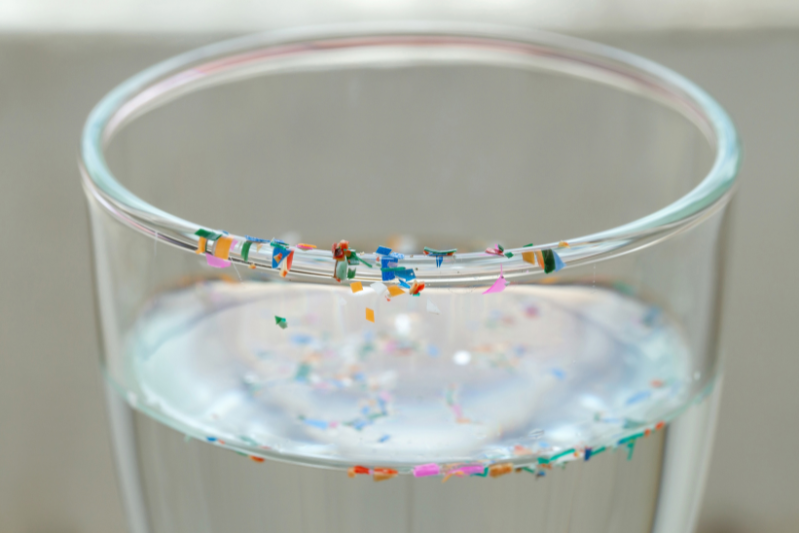
Sifts was built around a simple reality: microplastics have become embedded in the food chain, making complete avoidance unrealistic. More consumers are becoming aware that microplastics are showing up in our food, water and even in our bodies.
Many are taking steps to cut down on their exposure by using filters, opting for glass storage, choosing cleaner packaging and sourcing their food more carefully. These actions are important, but they don’t fully tackle what happens after we consume these microplastics.
That gap points to an emerging category we are working to define: Daily Environmental Exposure Support. This is neither a disease category nor a promise to fully solve microplastic exposure; instead, it focuses on supporting the body’s ability to handle unavoidable modern environmental particles.
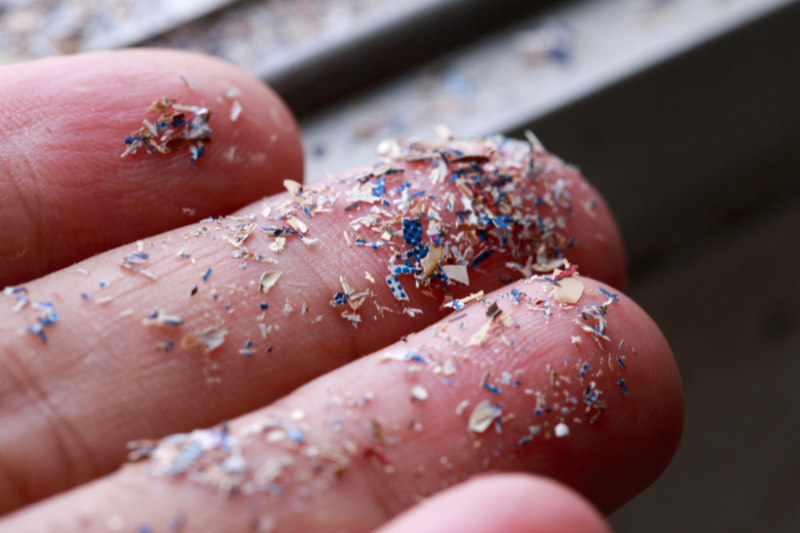
The evidence base for the approach we use should be understood in layers. First, there is the broader microplastics literature, which makes it clear that this issue has moved from an environmental concern to a human exposure and health-relevant question. Microplastics are now recognised as widespread environmental contaminants, with studies reporting their presence in human blood, lung tissue and placenta.
Other research has associated micro- and nanoplastics with findings in carotid artery plaque, semen quality and brain tissue, among other areas of the body. These studies don't prove that any specific intervention solves the issue, but they help to explain why consumers and researchers are paying attention.
As microplastic-focused supplementation and the research around it are still developing, claims discipline should come first. There is real consumer concern about the topic and the emerging research is compelling enough to make the space interesting. But the evidence must be handled carefully.
The goal shouldn’t be to promise a complete detox, total removal or guaranteed changes in the body’s microplastic burden; instead, it’s to describe plausible, testable mechanisms that support normal digestive processes and the body's natural elimination pathways.
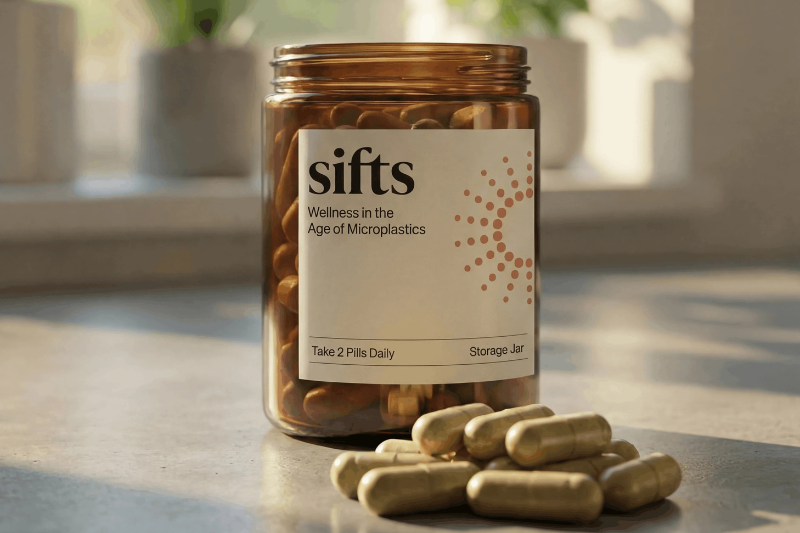
For Sifts, that meant starting with the gastrointestinal tract; ingestion is a primary route for exposure and the gut is the first site where a dietary supplement can plausibly and effectively act.
The formulation process at Sifts therefore began with the question: which ingredients have a credible mechanistic fit to interact with microplastics during digestion? We looked at whether certain dietary fibres and gut-supportive ingredients could play a role in gastrointestinal binding, transit, elimination and barrier support. That led us to what we describe as the binder-barrier method.
The binder side is built around chitosan, a cationic polysaccharide derived from chitin. In the stomach's acidic environment, chitosan's amine groups can become protonated, giving the polymer a positive charge. Many environmentally weathered microplastic particles can carry negative surface characteristics that create a plausible basis for electrostatic interaction ("binding").
This isn't a claim that chitosan captures every particle or produces comprehensive systemic clearance. Instead, it's a mechanism worth investigating further because it's specific, testable and directionally supported by early evidence.
The barrier side asks a related but distinct question: how do we support the gut environment while this interaction is taking place? At Sifts, that thinking informed the inclusion of ingredients such as apple pectin, baobab, slippery elm and magnesium glycinate, which were selected to affect digestive transit, gut comfort, fibre structure, tolerability and normal epithelial function.
At the mechanism level, chitosan has a history of research as a gastrointestinal binder, including studies showing increased faecal fat excretion in humans and the increased faecal excretion of lipophilic compounds such as BPA and DEHP in animal models.
The more directly relevant evidence comes from recent microplastic studies. In a 2025 Scientific Reports animal study, rats fed polyethylene microplastics with chitosan showed significantly higher microplastic excretion compared with controls, including a higher 24-hour excretion rate and lower gastrointestinal retention.1
There is also emerging human evidence. In a small study of healthy volunteers, 0.8 g of chitosan was associated with an increase in the number of microplastic particles measured in stool, including common polymers such as polyethylene, PET and polystyrene.2
A separate 2026 blinded, placebo-controlled human pilot study reported that 0.8 g/day of chitosan for 15 days was associated with an approximately 26% reduction in measured blood microplastic concentration, compared with no significant change in the placebo group.3
These studies are encouraging, but still foundational; they support the formulation rationale, although there's much work still to be done on the category. That is why Sifts is currently pursuing additional finished-formula testing with researchers at the University of New Mexico. The first stage uses a Franz diffusion model to evaluate the formulation under gastrointestinally-relevant in vitro conditions, including exposure to several common polymer types.
That isn't a substitute for finished-product human evidence, but it is a necessary step between ingredient-level plausibility and stronger product-level claims.
We have also worked to build scientific review into the company. Our lead clinical adviser, Dr Nehal Mehta, is a cardiologist and inflammatory specialist whose academic work has focused on inflammatory biomarkers and vascular risk. His background matters because the microplastics conversation can quickly drift into alarmism or dismissal. Scientific review helps to keep the work grounded in evidence, epidemiology and the distinction between an interesting association and a causal claim.
For us, claims substantiation in this category starts with a simple rule: say only what the evidence can carry. The claims we are comfortable with describe what the product is designed to support: normal digestive processes, interaction with particles during digestion and the body's natural elimination pathways. The claims we avoid are those that imply more than we can show: comprehensive removal, systemic detoxification, disease prevention or guaranteed changes in the body's total microplastic burden.
Microplastic-focused supplementation is still an emerging category. Our view is that the right way to build in it is carefully: start with plausible mechanisms, use measured language, keep testing the assumptions and let the evidence determine how the category develops.
References
- D. Liu and M. Shimizu, “Ingesting Chitosan Can Promote Excretion of Microplastics,” Scientific Reports 15(1), 14041 (2025): doi: 10.1038/s41598-025-96393-w.
- C. Casella, et al., “Preliminary Study on PCC-Chitosan's Ability to Enhance Microplastic Excretion in Human Stools from Healthy Volunteers,” Foods (Basel, Switzerland) 14(13), 2190 (2025): https://doi.org/10.3390/foods14132190.
- U. Cornelli, et al., “Reduction in Circulating Microplastics in Humans Following Gastrointestinal Sequestration by Chitosan: A Pilot Controlled Study,” Journal of Xenobiotics 16(3), 92 (2026): doi: 10.3390/jox16030092.